Reconstructing damaged image regions with a DRLN
Careful architecture and training choices produced a competitive result despite a large compute disadvantage.
Inspect the aligned outputs.
A from-scratch image-restoration entry that placed fourth while training on an 8GB GPU.
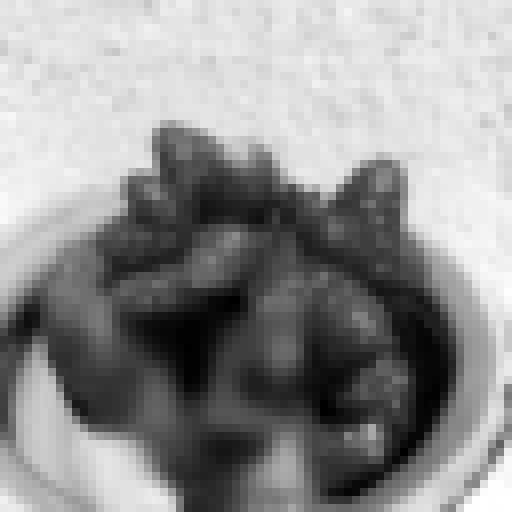
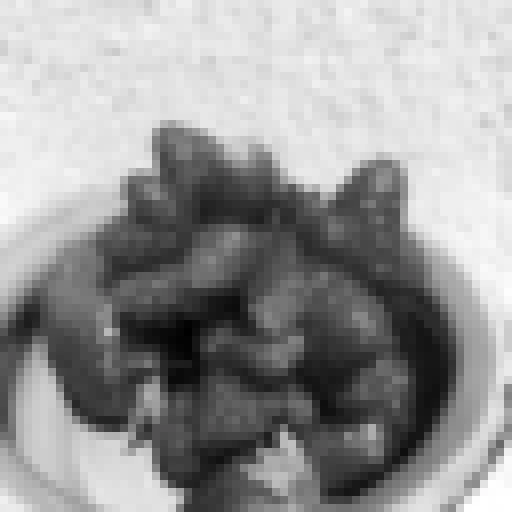
Judge the missing region directly.
Drag the boundary, or use the slider — it is keyboard operable. Hovering the crop with a mouse opens a 4× inspection lens.
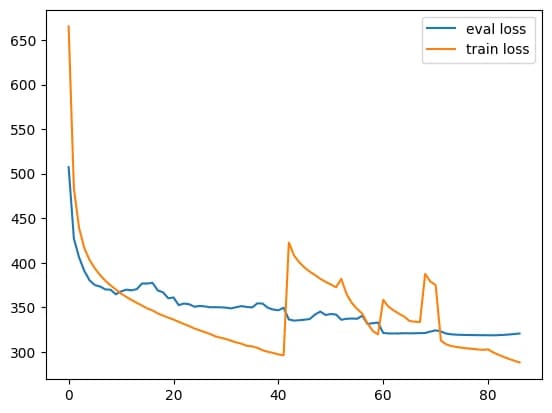
Loss reveals where training changed regime.
The notebook’s train and evaluation traces are shown as recorded, including the later discontinuities rather than smoothing them away.
How accurately can missing image blocks be reconstructed with a model trained from scratch using only 8GB of VRAM?
- 01
Generated block-corrupted inputs and known-pixel masks, then applied augmentation to create input–reference training pairs.
- 02
Built a residual CNN baseline and used residual connections to improve reconstruction quality.
- 03
Adapted a smaller Deep Recursive Laplacian Network to fit the available GPU, training with Adam and mean-squared error.
- 04
Added augmentation progressively, reduced the learning rate after plateaus, and compared corrupted inputs, reconstructions, and references at the same crop.
- Chose
- Adapted a smaller DRLN to fit an 8GB card, trained from scratch
- Instead of
- Fine-tuning a pretrained restoration model
- Because
- Pretrained weights and an A100 were not available to me. Architecture size was the variable I could actually control, so I spent the effort there.
The three higher-ranked entries used pretrained models and GPUs up to an NVIDIA A100 with 80GB of VRAM. Lower-ranked competitors also had access to A100 80GB GPUs.
- PyTorch
- Residual CNN
- DRLN
- Adam
- MSE
- Data augmentation